ADOS Atlas: turn drone footage into a 3D world model
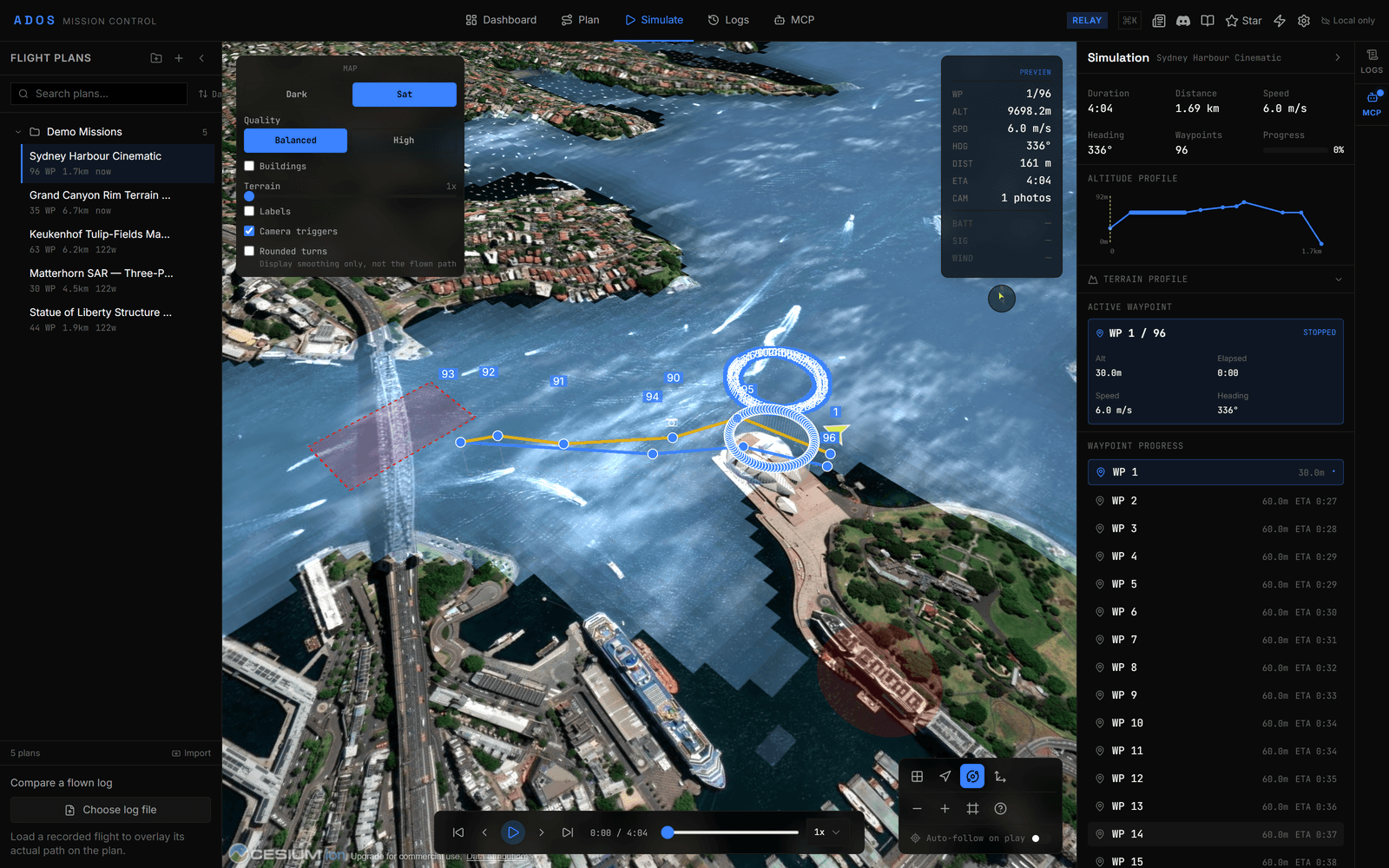
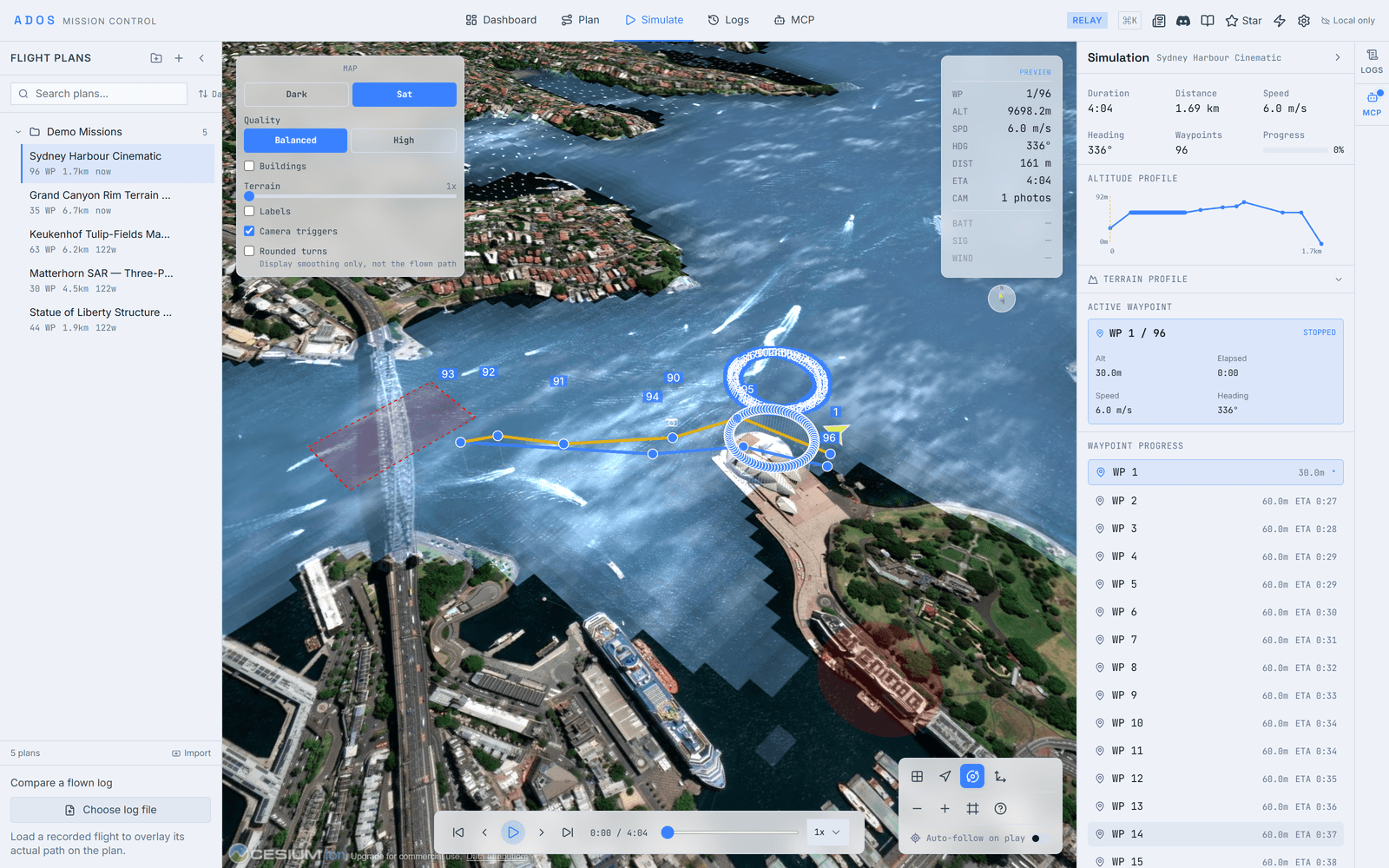
Point a camera at a scene, fly around it, and get back a 3D model you can spin, measure, and stream. That is ADOS Atlas. It ships today as the first-party World Engine extension, and it turns ordinary drone footage into a reconstructed world model.
The honest version of how this works matters, because reconstruction is heavy and the drone is not the place to run it.
Three surfaces, one flow
Atlas splits the work across three roles.
The drone is the camera. It takes its pose from the flight controller's estimate, or from SLAM run on the compute node, and captures keyframes tagged with that pose as it flies. It does no training and no reconstruction. This keeps the fast control loop on the vehicle untouched.
The compute node is the reconstructor. It is a separate machine, a workstation or a dedicated compute box, that takes the captured frames and builds the model: a gaussian splat, a point cloud, a mesh, and an occupancy grid. The reconstruction workbench on that node lets you process a capture, view the result, and stream it out.
Mission Control is the viewer. It shows the world model live as the node builds it, and again after the flight for review.
One camera or many
Atlas works with a single camera and scales to an all-sides rig. The number of cameras is a configuration value, not a fork in the code. Lead with one camera and let the flight path drive quality, then add cameras when a scene needs full coverage.
Shared data, not a silo
The world model is shared data on the platform, published on well-known topics for point clouds, occupancy, splats, pose, and mesh. Any plugin granted the world-read capability can subscribe to it. The compute node is not an Atlas-only appliance either. It is a shared heavy-compute substrate for the fleet, with a submit-and-read jobs API for reconstruction, perception offload, and SLAM offload.
That same substrate solves a second problem. A drone without an onboard accelerator can borrow the node's GPU for live detection and tracking: frames go out, a target comes back, and the control loop stays on the vehicle. When a result is stale or the link drops, the safety gate treats the target as lost rather than acting on old data.
Where it stands
Atlas ships as the World Engine extension. The installer turns it on by default for workstation and compute nodes, and capture on a drone stays off until you set atlas.enabled. You can capture a flight and reconstruct a splat on a compute node today. Turn capture on, fly a scene, and build your first world model.